Museums
Archaeological Museum
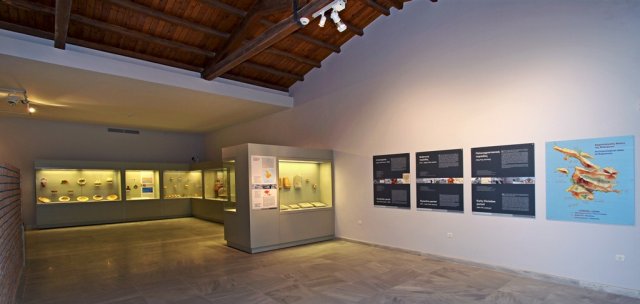
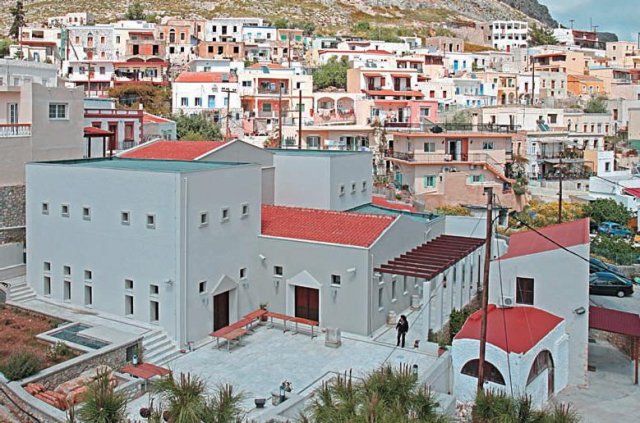
The Archaeological Museum of Kalymnos is located at Pothia, at the district of Agia Triadha and was inaugurated in the year 2009 Β .The museum building was constructed by the Ministry of Culture, in a property donated for the purpose by the Solonian Home for the Elderly in 1997. In the same property is located the Vouvalis Mansion, an exceptional example of 19th century urban architecture, where a small part of the Prehistoric and Byzantine collection were previously housed.
The organizations of the exhibition as well as partial conversions to the building were implemented by the XXII Ephorate of Prehistoric and Classical Antiquities within the South Aegean Regional Operational Programme 2000-2006.
The Exhibition
In the entrance hall a short introduction informs the visitor of the long history of Kalymnos. Artifacts with no indication of provenance, finds of illicit excavations, confiscated or handed-over, are displayed in a case; stripped of their true archaeological value they are presented merely as objects of art. Notable among them are the bronze ceremonial (?) object crowned with a group of five Egyptian deities, of the 1st c. BC- 2nd c. AD, the hydria of alabaster and the krater with a dionysiac scene. On the wall next to the entrance funerary stelae with inscriptions bearing the name of the deceased and funerary banquet relief are exhibited, dating from the 3rd c. BC until the Roman Imperial period. Two large pithoi from Dhaskaleio cave at Vathy belong to the prehistoric section.
In room A, the first section refers to life on the island in the Prehistoric Period, with finds dating from the Late/Final Neolithic down to the Mycenaean period (5300- 1180/1065 BC), from the excavations Β in the Agia Varvara, Dhaskaleio and Choiromandres caves. The exhibit includes tools and vessels of the Neolithic period, pottery an tools of the Early Bronze Age, finds of the Minoan and Mycenaean period; exceptional among them is the bronze Minoan worshipper figurine. The large marble Cycladic statuette is displayed in a separate case; a confiscated item, probably from Amorgos.
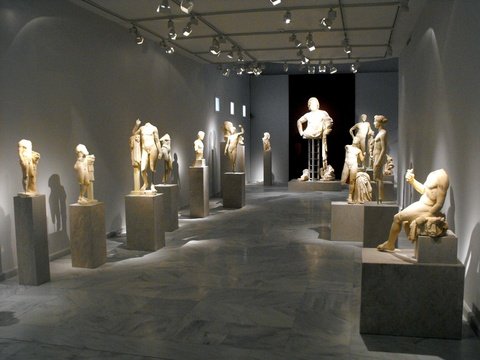
The second and largest section of the exhibition refers to the most important religious and political center of ancient Kalymnos, the sanctuary of Apollo Dalios. The great numbers of offerings found in the two votive deposits of the sanctuary testify to the sanctity and cultic character of the site. The early historic times (7th – 6th c.BC) are represented with large kraters and dinoi with painted decoration, a bronze griffin, a great number of terracotta offerings in the shape of bovines and the rare in the area type of draped kouros with painted decoration, dedicated to Apollo, dating in 530 BC. The Classical and Hellenistic times, i.e. from the 4th until the 3rd/2nd c. BC, are illustrated by a great number of marble sculptures, among which sculptures of Apollo (?), nude youths, the goddesses Hygieia (?) and Athena, young children, as well as the colossal figure of the cult statue of god Asklepios, of the 2nd c.BC. The sanctuary section concludes with inscriptions which give valuable information about Kalymnos’ public life, honorary decrees granting privileges to foreigners who benefited the island, testimonies to women’s status, as well as inscriptions with manumissions of slaves.
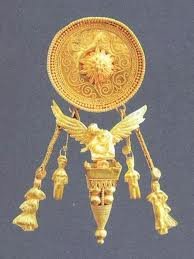
In Room B, silver and bronze coins, strikes of Kalymnos and Kos, as well as of foreign city-states are exhibited. The second section includes finds of excavations at Damos, the ancient settlement which developed in the area of Panormos during the Late Hellenistic period. Notable are the relief oil lamps, as well as insence burners, altar miniatures, figurines and metal tools. The third section consists of typical finds from the Kalymnian necropoleis and valuable gold jewelry: diadems, wreaths, impressive earrings, finger rings and appliquΓ©s from the garments of the deceased, vessels, as well as exceptional artifacts of glass. The section ends with a funerary stele with relief depiction of a mother breast- feeding her baby, of the 4th c. BC.
Dominant in the room are unique works of Hellenistic bronze casting, hauled up from ancient wrecks in the wider sea area of Kalymnos. These are the colossal female figure, draped in chiton and tasseled himation, known as the "Lady of Kalymnos", the head of a ruler with kausia and strophion, the legs of a portrait- statue on horseback with elaborate sandals and spurs, and finally, the dolphin.
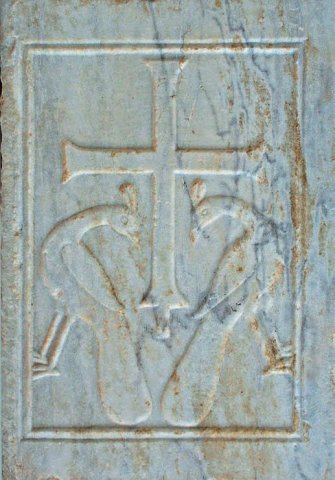
On the upper floor of the building the Early Christian (4th- 7th c.AD), Byzantine (8thc.- 1453 AD) and post- Byzantine Kalymnos are presented. Architectural members from numerous monuments on the island are used to reproduce an Early Christian basilica, while displays include pottery and everyday life objects, grave offerings, as well as icons and manuscripts, representative cultic objects of the Byzantine period on the island. In the last section finds from the Kastro in Chora Kalymnou and information panels about other castles on the island are presented.
(Text: Anastasia Dreliossi- Herakleidou, Dimitris Bosnakis
Translation: Fotini ZervakiΒ
XXII Ephorate of Prehistoric and Classical Antiquities)

Maritime and Folklore museum of Kalymnos
Maritime Museum of Kalymnos
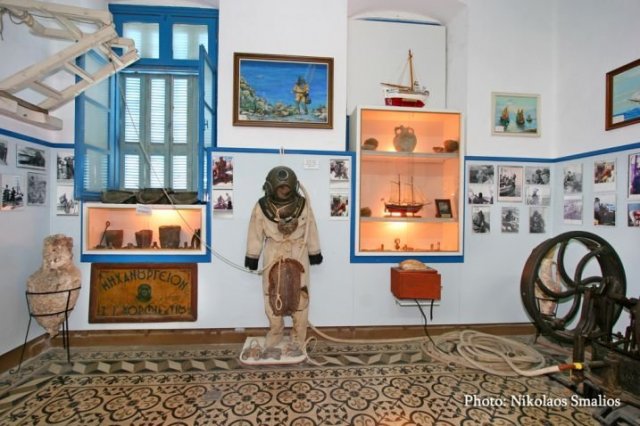
The Maritime Museum of Kalymnos was founded in 1994 and it is located in the coastal zone of Pothia, in the building of the former Vouvaleios Technical School, next to the Town Hall. At the museum you can see and learn about the island's sponge diving tradition, history and methods of sponge fishing .Also if you visit the museum you'll see many artifacts from the wrecks of ancient ships as well as articles on sponge diving and sponge treatment.
The exhibition is divided in three different parts where the visitors have the opportunity to see objects with reference to sponge diving profession and a great number of exhibits related to sponge- fishing as well as the elaboration of sponges.
In the first part photographs from the early 20th century are exhibited and illustrate the events that took place during the departure of the sponge divers. Various anchors, nautical maps of past centuries and finds from shipwrecks, complete the exhibits.
The second and third part also refers to sponge-fishing, with a large section dedicated to ""skandalopetra"", a piece of stone, usually marble or granite, with rounded corners and streamlined shape, weighing 8-14 kg, which was used by Kalymnian sponge divers from antiquity until a few years ago, as an auxiliary tool in diving.
Folklore Museum of Kalymnos
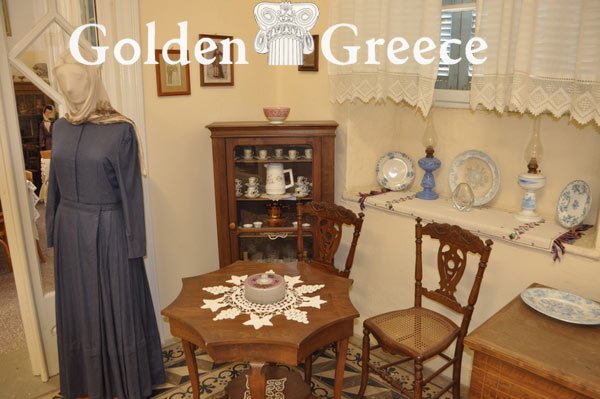
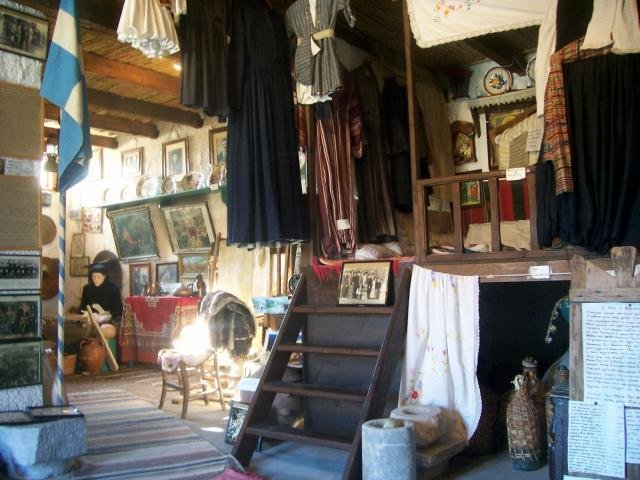
In in the building of the former Vouvaleios Technical School is also housed the Folklore Museum of Lykeion Ellinidon, displaying significant items of the popular culture of Kalymnos. A variety of exhibits including local costumes, bridal dresses, housewares, a loom, a spindle, a hand mill, pottery jugs and traditional furniture, like the krevatos, the large family bed with a baby cot above it informs the visitor of the customs and traditions of Kalymnos and gives the visitor the opportunity to see the way life was organised in a traditional urban house towards the end of the19th and beginning of 20th century.

Traditional Kalymnian House
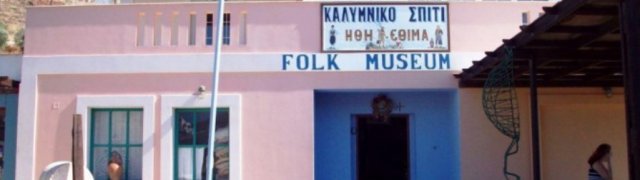
It is located in the southern outskirts of the monastery of Aghioi Pantes and Aghios Savvas 1, 5 km from Pothia Town, in the region Vothynoi. It is a private Folklore Museum established by Mrs Faneromeni Skylla with objects of popular culture and household items of old houses.
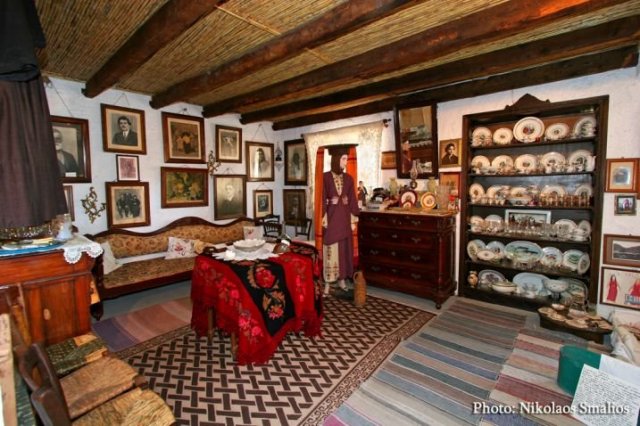
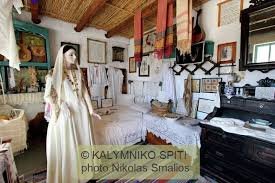
The exhibits include local costumes, bridal dresses, houseware, a loom, a spindle, a hand mill, pottery jugs and traditional furniture, like the krevatos, the large family bed with a baby cot above it. Visitors can also see old coins, books, letters, weapons and swords. The staff of the museum will offer you the local wine anama and bread. Here the visitor has the opportunity to see the way life was organized in a traditional urban house towards the end of the19th and beginning of 20th century. The Traditional Kalymnian House has been rewarded recently by Hata 2004.
Museum of marine life and findings - Valsamidis Museum
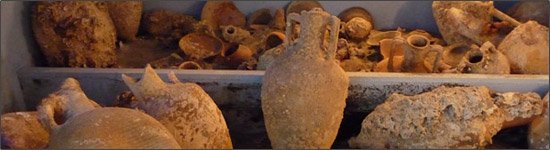
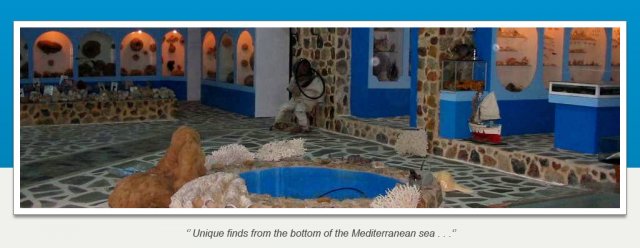
It is located at the coastal village Vlichadia. It is a private museum, a life's work of Valsamidis brothers, who were born and live in Kalymnos, with exhibits related to sponge fishing, a big variety of sea plants and sea animals and a collection of trade amphorae and other finds from ancient shipwrecks.Β
It is one of the richest private collections in Greece and they needed over forty (40) years to collect these findings. Various kinds of sponges, corals, shells, fish, strange sea creatures, sponge diving equipment, World War II findings, pictures, documents, coins, ancient amphora and even an ancient wreck, are included in their collection .
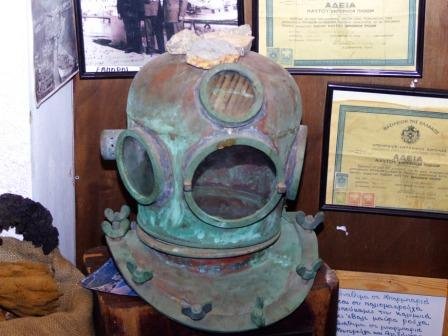
Part of the museum is dedicated to the profession of sponge-fishing and includes all the tools and protective suits used by divers, from 1872 until today. In a wing are exhibited findings of the First and Second World War such as torpedoes, pieces of airplanes etc. In a specially designed area the visitor has the opportunity to see amphorae of the 6th, 4th, 3rd and 2nd c.BC. There is also a collection of about 2,000 photographs related to the history and tradition of sponge-fishing.
Finally in the museum you will also witness the sponge processing and you may find nice souvenirs such as sponges, corals and shells in the store that operates within.

Neoclassiko
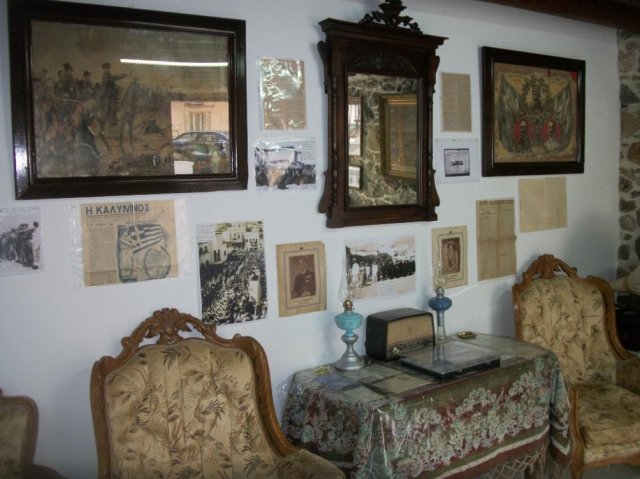
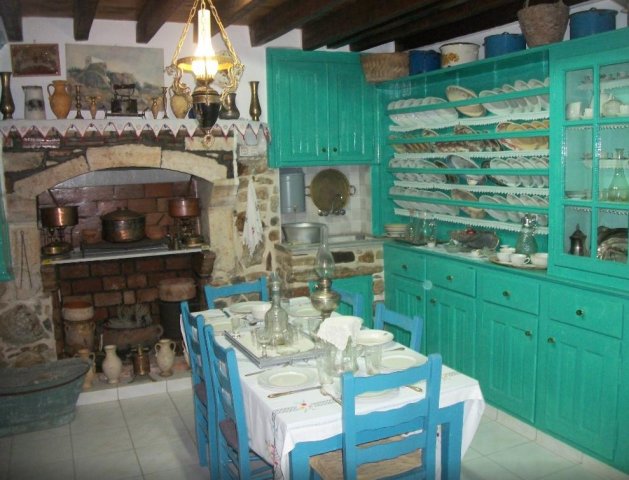
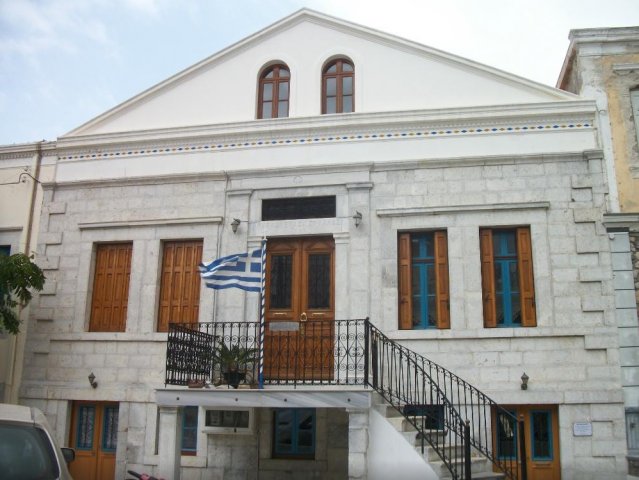
The building that contains collection “NEOCLASSIKO” is one of the most beautiful houses of the beginning of the 20th century in Kalymnos. The collection consists of family heirlooms, photos, objects of everyday use that remind us of old periods. In the kitchen you can see the plate rack with ancient plates, glasses, treating trays, items for making bread, clay ware and others. In the bedroom you can see an old age bed, some embroidery from the Kalymnian community of Saint Petersburg in Russia where the great grandparents of the occupant of this house had restaurants and pastry shops. During the Russian revolution they played a great role with the rescue of Queen Olga of Greece. She was helped to escape and go to Greece as she disguised herself by wearing different clothes…
This building is easily accessible from the port of our island and from the taxi station. There is a parking area for cars. You will be excited by visiting “NEOCLASSIKO”.
Opening hours: daily 11:00-15:00 (From Monday to Saturday)
Call for visits in the Afternoons and Sundays (Mobile: +30 6946465882, email: neoclassiko@gmail.com)
Free Entrance