Archaeology
Castle of Chora or Great Castle
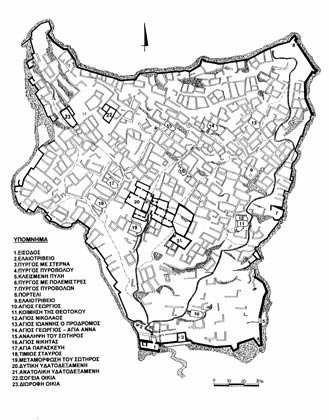
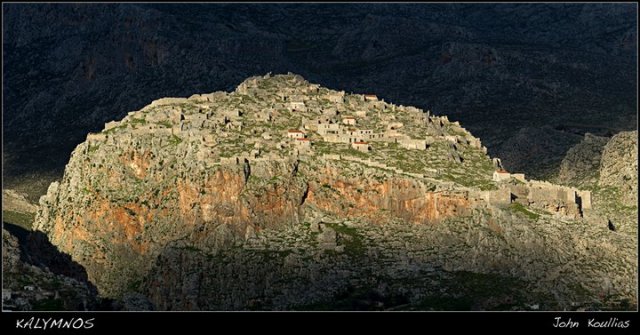
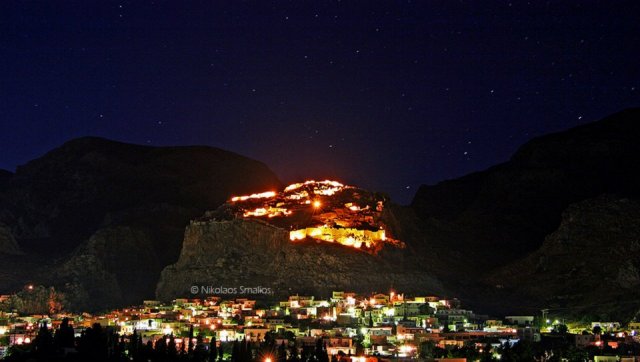
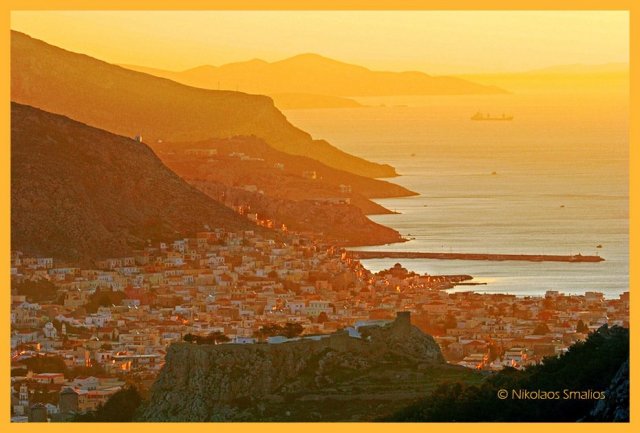
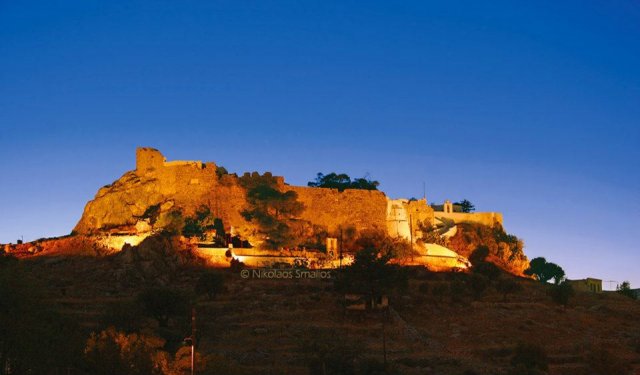
The Castle of Chora or Great Castle is located at the northeast of the settlement of Chora, on the top of a steep mountain mass, at an altitude of about 255 meters above sea level. Β Powerful walls surround the perimeter of the area of the hill, enclosing an area of about 30,000 square meters. The densely built settlement is estimated that could accommodate about 1,200-1,500 inhabitants. Human activity in the area, according to various findings from the soil surface, dates back to prehistoric times (findings of classical and roman period were also discovered in the same area).
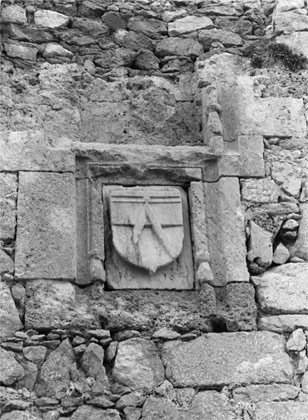
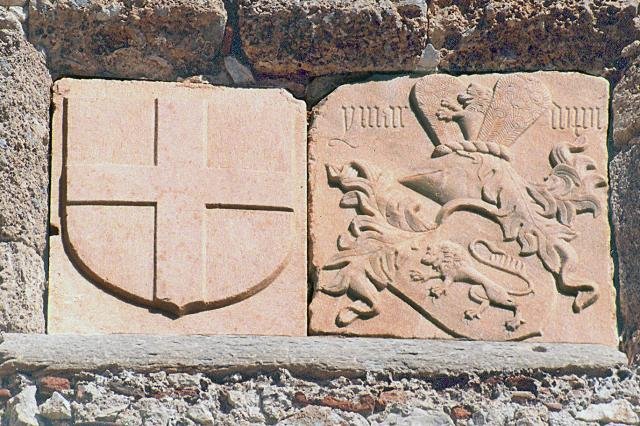
The first fortifications were probably constructed in the 11th century and later on during the governance of Knight Fantino Quirini (1433-1453) large scale reconstruction operations were realized which gave to the fortification of the castle its current form. After the terrible earthquake of 1492/3 the Grand Magister Pierre d 'Aubusson (of the Order of the Knights of Saint John the Baptist) decided to reinforce Castle of Chora (according to the chivalric files located in Malta the castle was ready in 1495). In the early 16th century, the Grand Magister Fabrizio del Carretto, built in the middle of the eastern wall a polygonal tower (Tower G), for firearms. In the same period were built the two large public cisterns in the center of the settlement and double marble coats of arms were placed on Β three buildings (Tower G and two public cisterns) Β with that of Carretto above and those of Castellan Β Knights below.Β
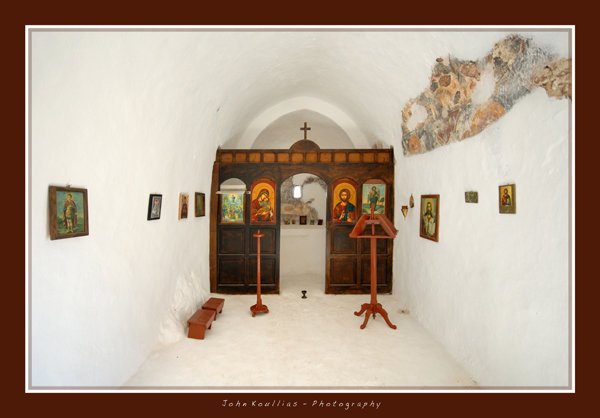
Inside the Castle ten churches are found, in the interior of which wall paintings of the late 15th- early 16th century are still to be found. The houses have rectangular or irregular floor plan and they are adjacent to each other due to lack of space. The majority has small dimensions and some of them were built-in to the wall of the fortification. For the preparation of food and for heating there were fireplaces. Many houses had their own cisterns for collecting rainwater and in the center of the castle were built two particularly large public water tanks. Within the castle were two olive-presses for the production of olive-oil to cover their daily needs.
The Castle of Chora constituted the built-up center of medieval Kalymnos, until the beginning of the 18th century (in the Castle also lived the Turkish Agha of Kalymnos), when the settlement of Chora was developed.
Agia Triada
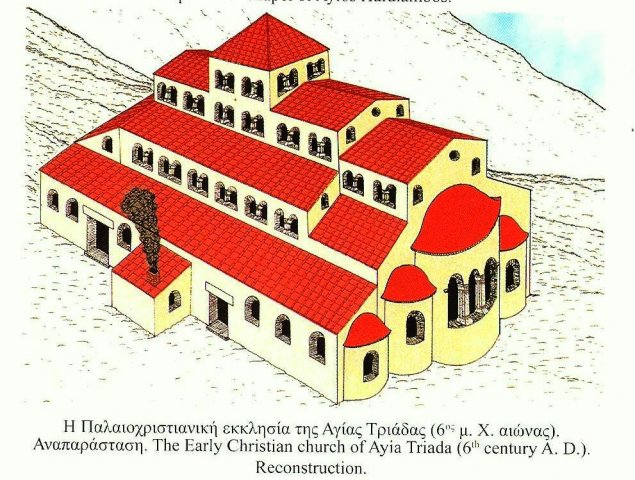
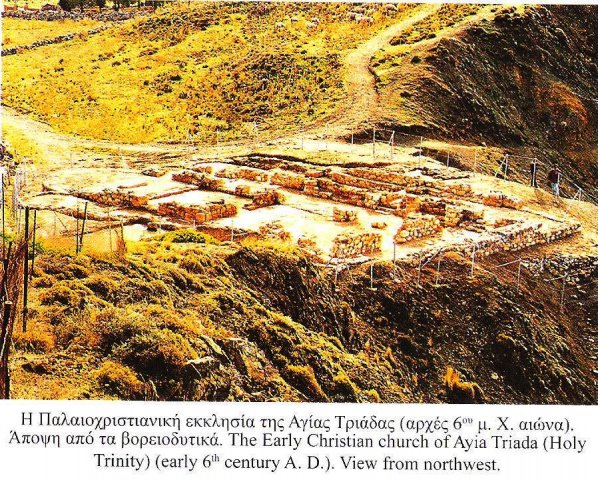
To the west side above Hohlakas beach, excavations in 1998 revealed the complex of the early Christian church of Ayia Triada (Holy Trinity) with outbuildings to the north and south. The three-aisled basilica with three semicircular apses at its east end has also a narthex to the west. Ayia Triada was built during the first half of the 6th century A.D. and was demolished by the earthquake of 554 A.D. Later, during the Middle Byzantine years, an attempt was made to convert the eastern part of the central aisle in a small chapel, as evidenced by subsequent sections of masonry.
Castle of Chrysocheria
In the middle of the 15th century the Castle of Hrysoheria was built by the Order of the Knights of Saint John, between Chora and Pothia. On its east slopes the church of Metamorphosis (Transfiguration) of Christ is found, while at the west stands the church of Ayios Ioannis (Saint John) the Baptist. Both of them are decorated with Post Byzantine wall paintings of the late 15th – early 16th century. A few meters northeast of Hrysoheria Castle three old windmills still stand. In the neighbouring region of the castle many Mycenean graves with burial offerings were discovered in the 19th c., which are kept nowadays in the British Museum of London. Human presence has been ascertained here, during the Neolithic, Mycenaean, Hellenistic and Byzantine period. During the Hellenistic period on the hill probably was located a temple with the statues of Dioskuri (or Dioscouri) as an inscription of the 2nd c. B.C. indicates.Β
The Kalymnians during that time (the rule of the Knights 1309- 1523 A.D.) had the privilege of electing representatives, who presented island affairs at the central authority , as it happened in the case of the Hrysoheria Castle, when the Knight Fantino Quirini required in 1444 that Kalymnians work for its construction. The local people had disagreed and risen, considering it a pointless task because of the pre-existence of the Castle of Chora on the island. The affair led to the court of Rhodes in 1445. The judicial result however vindicated Quirini. The marble coat of arms on the left of the staircase of the castle’s eastern entrance is irrefutable evidence of the identity of its first commander. On the same side are also built-in the castle’s wall two more coats of arms of the Knight Commanders of the four islands, Adimaro Dupuy (1464-1466) and Giacomo de la Geltru (1466 and 1479).
The Castle of Chrysoheria was finally abandoned in the late 15th century, due to continuous destructive raids of the Turks. The Castle is well preserved and within its walls the visitors have the opportunity to see remains of medieval buildings, underground grain storage, the church of Saint George and the church of Panagia( Virgin Marry) of Chrysoheria, a stone paved path and some newer buildings.
Agios Charalampos
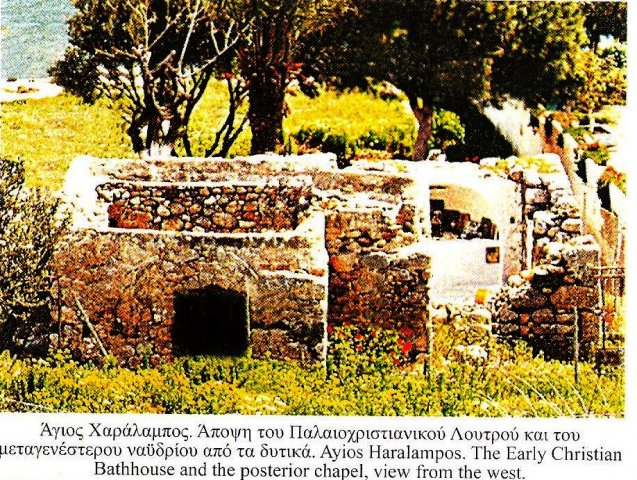
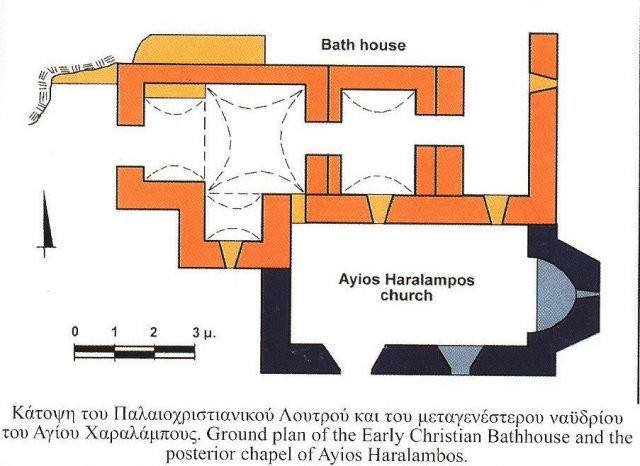
Walking along the coastal road we reach the complex of the Early Christian Bathhouse and the church of Ayios Haralambos (small single-nave edifice with internal dimensions of 5.85 m to 2.95m, without the aps, and entrance from south). The bathroom consists of three main rooms which communicate with each other and the main entrance is from the west.
Kasteli Fortress
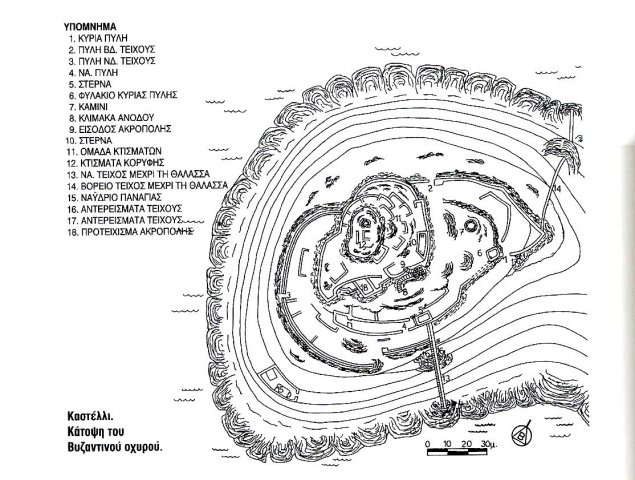
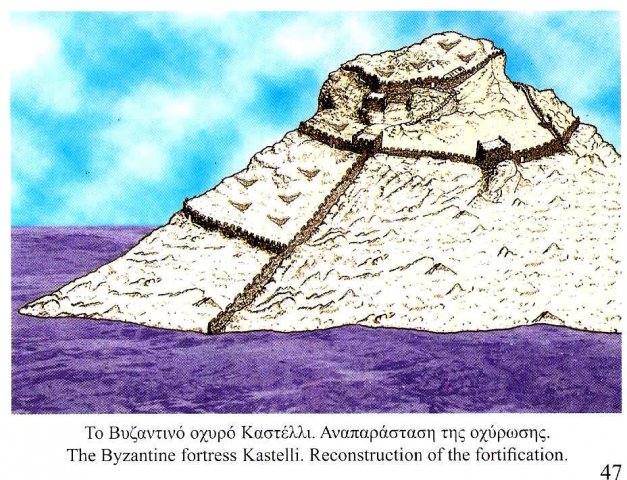
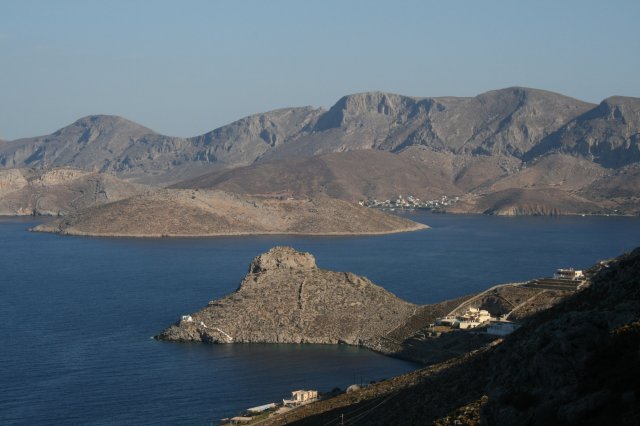
During the 7th century, the time of the Arabian raids, the coastal fortress Kastelli was built at the homonymous location, on the opposite island of Telendos. It was built on a naturally fortified area which allows the nominal control of the sea area between Kalymnos and the neighboring island of Telendos.
The natural division of the Kastelli hill into two different levels was wonderfully exploited by the Kalymnians and it provided the Kalymnians with the ability to react directly in potential threats and defend themselves against attacks that came from land or sea. The entrance to Kastelli was and is carried out through gates that exist in the outer wall, while the water supply was being ensured by water tanks.
The intense and extensive human activity in the area of the fortress is witnessed by the abundant pottery, existing on the surface of the ground. Possibly it was in use until the 9th or 10th century at the present moment however we are not sure until when precisely it was inhabited.
Palia Panagia
Palia Panayia is a large three aisle early Christian church, with three semi-circular apses at the east side, a baptistery and various outbuildings.
Agios Vasileios
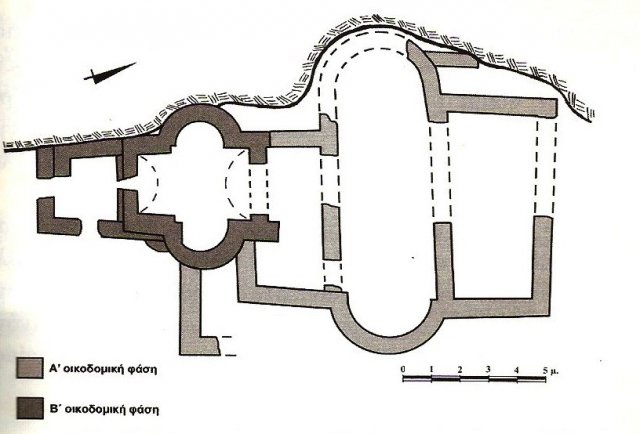
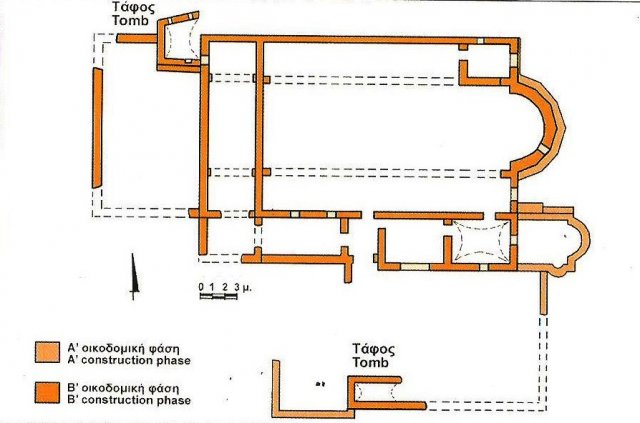
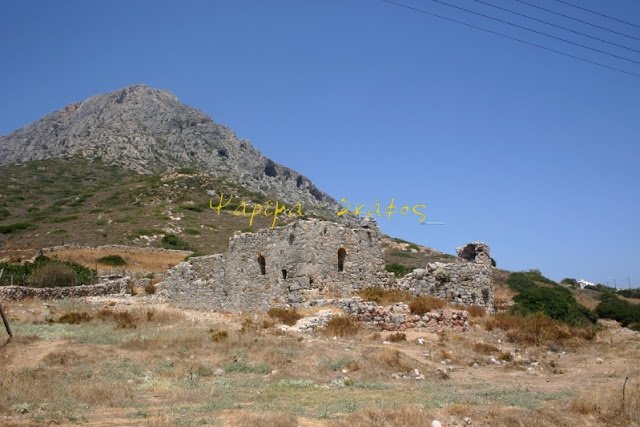
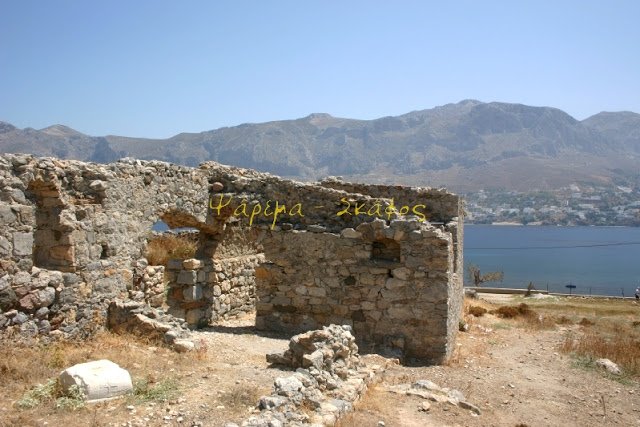
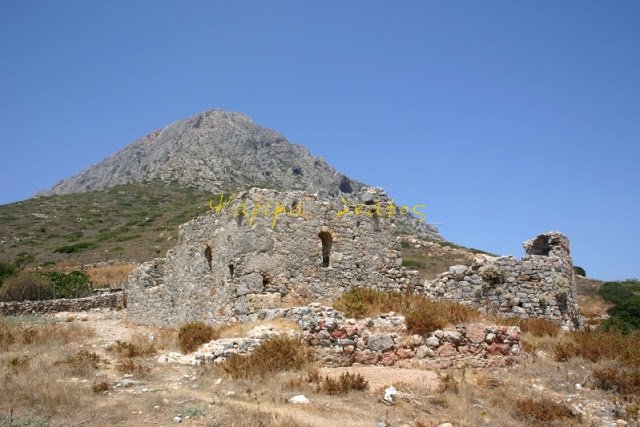
Ayios Vassileios is the largest and most well preserved Early Christian church of both Telendos and Kalymnos. This church is nowadays preserved up to the height of the roof. At this church and through its three phases of construction visitors can witness for themselves the history of Telendos. At a distance of a few metres to the east lie the ruins of a Bathhouse.Β
Tholaria
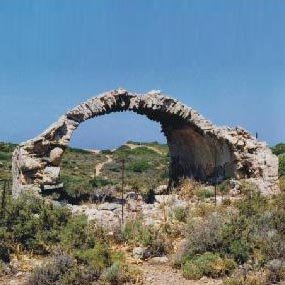
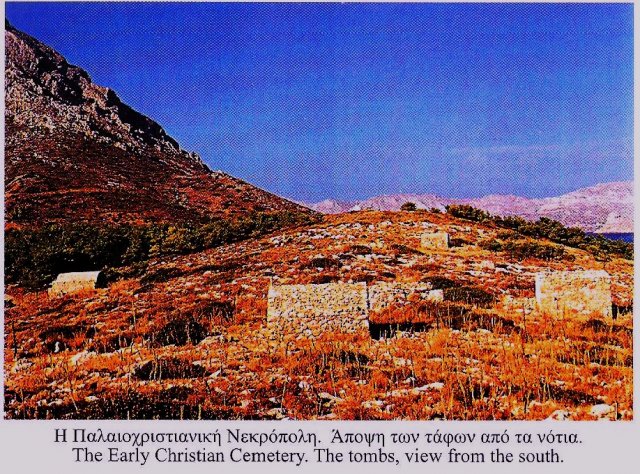
Continuing south we reach the region Pefki or Tholaria. The name of the area is attributed to the Early Christian cemetery of the island which includes ten barrel vaulted tombs.
Agios Konstantinos
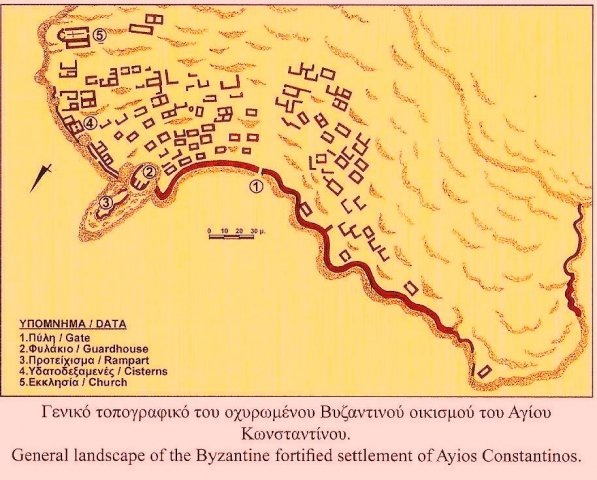
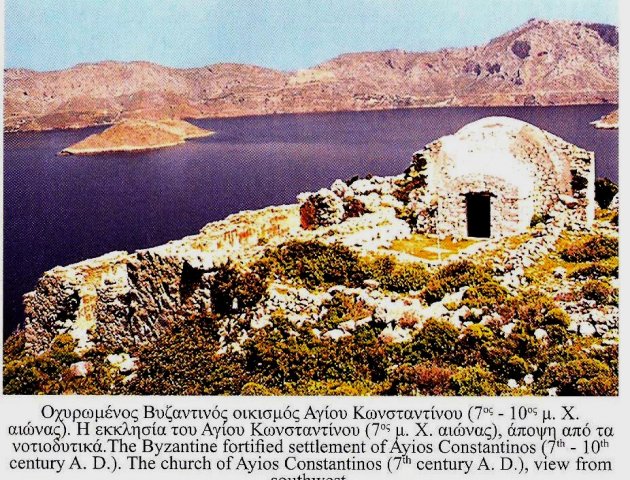
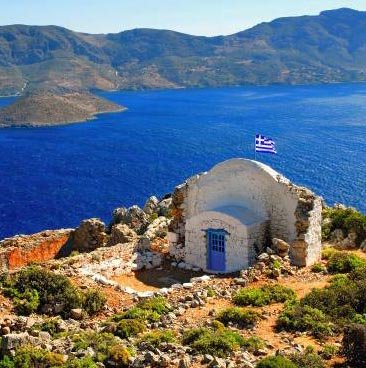
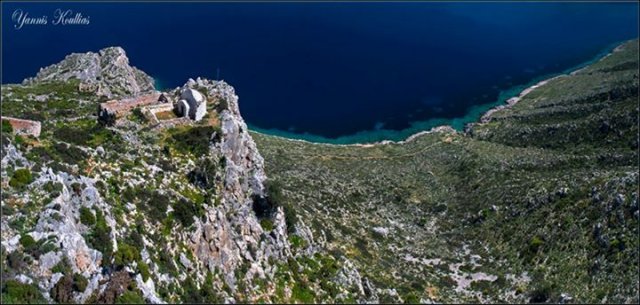
The fortified settlement of Ayios Konstantinos (7th- 10th century) is built on the north mountainous slope of the island. It is accessible by two ways. Via footpath, this begins westwards of the church of Ayios Vassileios and leads to Ayios Konstantinos after an hour of walk. The second and easier is by ship, which leaves the visitors on a small bay. From there it's a sort walk to the Byzantine fortified settlement, with houses, cisterns, fortified walls and the ruined church of Saints Constantine and Helen. At the Holy Bema a unique fresco with a cross, decorated with painted jewels (7th cent.) still stands today.
Vasiliki Pothas
At a distance of approximately 1000 meters north of the present settlement, are lying the ruins of the western part of a three-aisled Early Christian church with its eastern part submerged, result of the earthquake of 554 A.D.
Temple of Delian Apollo
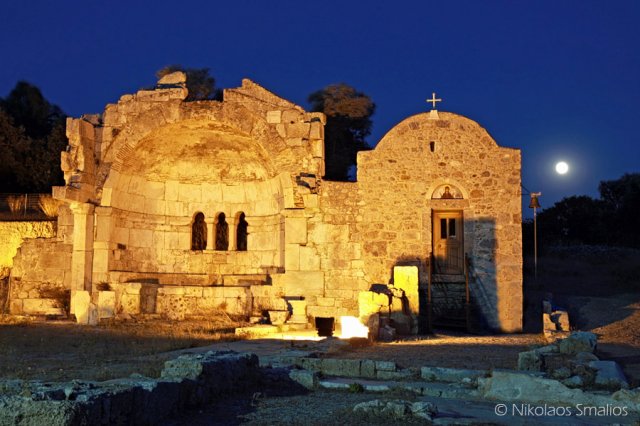
The area in which you see the remnants of the Basilica of Christ of Jerusalem now, is the same in which during the pre-Christian times the temple of the Delian Apollo was located, the patron olympic god and protector of Kalymnos. According to inscriptions, the area was the political and religious center of ancient Kalymnos. Here were the temples of Apollo and Asclepius, the theatre, the gymnasium and the voulefterion (parliement).
The arrival of Christianity, after the persecutions by the Roman emperors, brought the subsequent closure and destruction of the Temple.
The basilica was built in the 5th century AD, probably destroyed in the mid-sixth century by an earthquake and then rebuilt.
Also 40 meters southeast of the basilica another Church was built, Santa Sophia. In the 7th century though, all was abandoned due to the Arab raids.
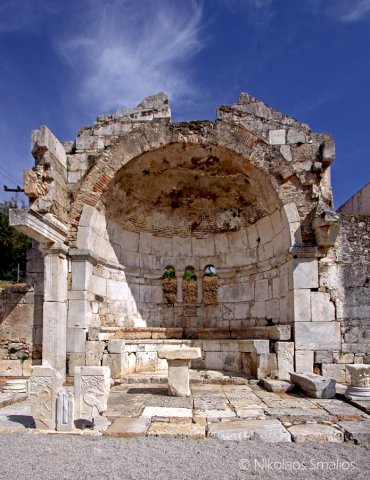
From the Basilica of Christ of Jerusalem only the eastern part has been revealed from the excavations by the Archeologists, the Englishman
Ch. Newton and the Italian M. Serge in 1937. The arch of the sanctuary in full size is maintained in good condition. Building materials used for the
Church were taken from the ancient temple of Delian Apollo which existed on the same site, such as architectural and inscribed blocks of a building.
The central aisle is paved with large pieces of marble, while the south is covered with a mosaic that includes animals in their natural environment.
Author of the Article
Michael Koutellas,
Archaeologist